
Publication information
Recommended External Reading
Inclusion in this library does not imply formal endorsement by ISPAR unless the publication is explicitly identified as an Official ISPAR Publication.
- Relationship to ISPAR
- Recommended External Reading
- Authors
- Alice Dejoux, Qianqian Zhu, Christelle Ganneau, Odile Richard-Le Goff, Ophélie Godon, Julien Lemaitre, Francis Relouzat, François Huetz, Aurélien Sokal, Alexis Vandenberghe, Cyprien Pecalvel, Lise Hunault, Thomas Derenne, Caitlin M. Gillis, Bruno Iannascoli, Yidan Wang, Thierry Rose, Christel Mertens, Pascale Nicaise-Roland, NASA Study Group, Patrick England, Matthieu Mahévas, Luc de Chaisemartin, Roger Le Grand, Hélène Letscher, Frederick Saul, Cédric Pissis, Ahmed Haouz, Laurent L. Reber, Pascal Chappert, Friederike Jönsson, Didier G. Ebo, Gaël A. Millot, Sylvie Bay, Sylvie Chollet-Martin, Aurélie Gouel-Chéron, and Pierre Bruhns
- Journal or publisher
- Science Translational Medicine
- Publication date
- September 11, 2024
- PubMed ID
- 39259810
- DOI
- 10.1126/scitranslmed.ado4463
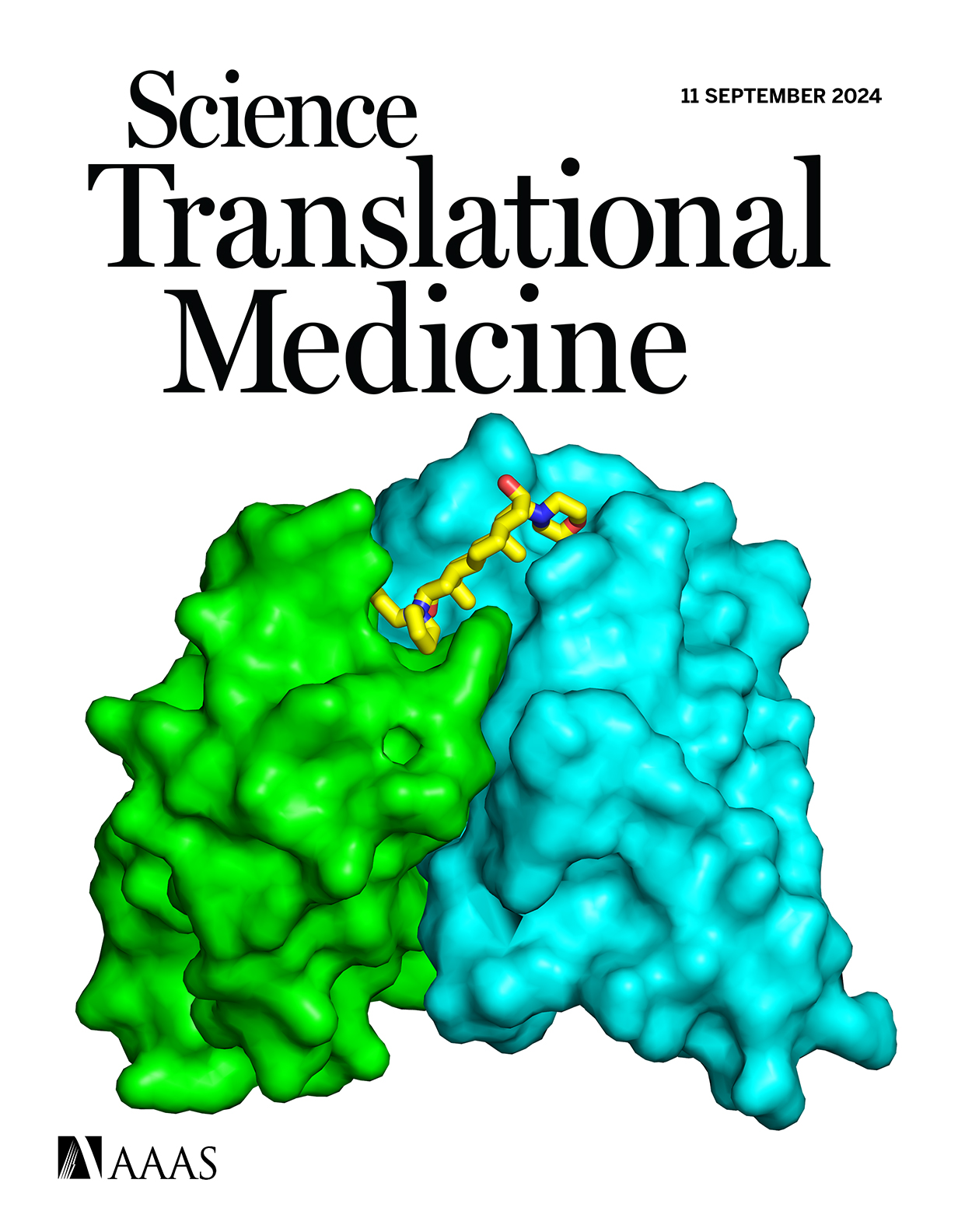
Neuromuscular blocking agents (NMBAs) relax skeletal muscles to facilitate surgeries and ease intubation but can lead to adverse reactions, including complications because of postoperative residual neuromuscular blockade (rNMB) and, in rare cases, anaphylaxis. Both adverse reactions vary between types of NMBAs, with rocuronium, a widely used nondepolarizing NMBA, inducing one of the longest rNMB durations and highest anaphylaxis incidences. rNMB induced by rocuronium can be reversed by the synthetic γ-cyclodextrin sugammadex. However, in rare cases, sugammadex can provoke anaphylaxis. Thus, additional therapeutic options are needed. Rocuronium-induced anaphylaxis is proposed to rely on preexisting rocuronium-binding antibodies. To understand the pathogenesis of rocuronium-induced anaphylaxis and to identify potential therapeutics, we investigated the memory B cell antibody repertoire of patients with suspected hypersensitivity to rocuronium. We identified polyclonal antibody repertoires with a high diversity among V(D)J genes without evidence of clonal groups. When recombinantly expressed, these antibodies demonstrated specificity and low affinity for rocuronium without cross-reactivity for other NMBAs. Moreover, when these antibodies were expressed as human immunoglobulin E (IgE), they triggered human mast cell activation and passive systemic anaphylaxis in transgenic mice, although their affinities were insufficient to serve as reversal agents. Rocuronium-specific, high-affinity antibodies were thus isolated from rocuronium-immunized mice. The highest-affinity antibody was able to reverse rocuronium-induced neuromuscular blockade in nonhuman primates with kinetics comparable to that of sugammadex. Together, these data support the hypothesis that antibodies cause anaphylactic reactions to rocuronium and pave the way for improved diagnostics and neuromuscular blockade reversal agents.